Say you fall for a 1920s bungalow in Norman's Miller Historic District. The inspection turns up what you expected on a hundred-year-old house: single-pane wood windows, drafty and original. Your instinct is the standard playbook. Ask the seller for a repair credit, then swap them for efficient vinyl replacements after closing.
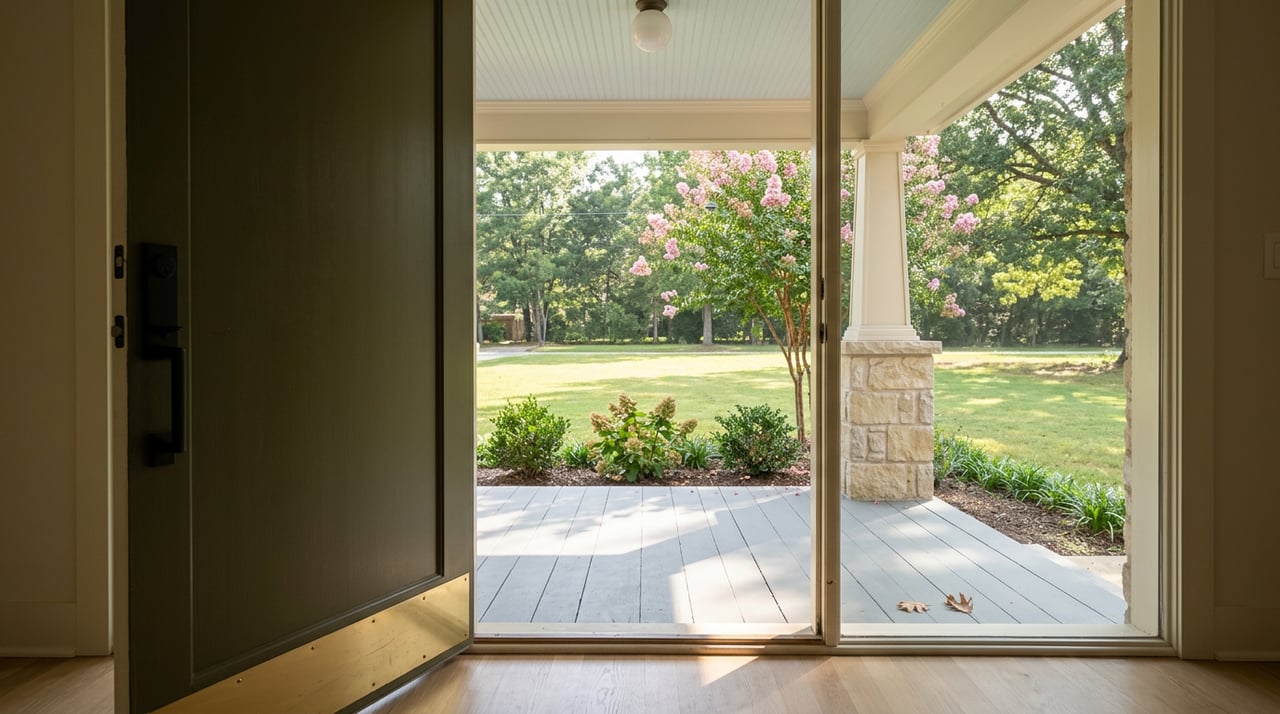
That plan does not survive contact with Norman's Historic Preservation Guidelines. Vinyl windows are not permitted on structures in any of the city's three historic districts, and even a straightforward window swap is only allowed when repair is genuinely not feasible. If it is allowed, the replacement has to match the original material, dimensions, divided-light pattern, and profile. What felt like a simple line item in your inspection response now needs a city commission's approval before a contractor can touch it.
That is the piece of this market most buyers do not learn until they are already under contract. Norman has three protected historic districts, Chautauqua, Miller, and Southridge, and inside their boundaries the house is not entirely yours to modify. A nine-member Historic District Commission has a say in almost every exterior change you might want to make, and understanding how that commission actually rules matters more to your closing timeline than the listing price does.
A Commission With Real Authority, Not a Design Suggestion
The Historic District Commission meets the first Monday of each month at 5:30 p.m. in Council Chambers at Norman's Municipal Building, with one standing exception in September when it shifts to the second Tuesday. Any exterior work that changes how a structure looks from the outside requires a Certificate of Appropriateness, commonly shortened to a COA, before a building permit can even be pulled. That covers new construction, additions, demolition, replacement doors and windows, fences, accessory structures, swimming pools, paving and parking areas, signage, and new or replacement light fixtures.
Some smaller items can clear a faster administrative path called an Administrative Bypass, handled by city staff instead of the full commission. A small accessory structure under 120 square feet, tucked in the rear yard and out of view from the street, can qualify. So can a garage door replacement on a non-historic garage that already faces an alley. Ordinary maintenance and repair does not trigger review at all, and a surface that is already painted can be repainted in any color without a hearing. Painting previously unpainted brick or stone is a different matter and generally requires approval first.
Three Districts, Three Different Time Capsules
The three districts were designated years apart and each one froze a different slice of Norman's growth.
| District | Established | Scale | Predominant era | Character |
|---|---|---|---|---|
| Chautauqua | 1995 | About 153 residential structures | 1915 to 1935, mostly 1920s | Architecturally mixed, from Craftsman to Tudor to Colonial Revival |
| Miller | 1997 | About 150 homes | 1910 to 1938 | Craftsman bungalows, part of the 1903-platted Classen-Miller Addition |
| Southridge | 2016, expanded 2018 | 120 properties plus Earl Sneed Park | 1920s through 1950, platted 1922 | Tudor Revival and Colonial Revival |
Chautauqua runs roughly from Symmes Street on the north to Brooks Street on the south, with Chautauqua Avenue as its eastern edge and Lahoma Avenue as its western edge. Miller grew out of a faculty and business-leader neighborhood that filled in after a growth spurt doubled Norman's size following World War I. Southridge is bounded roughly by Macy Street on the north, Shawnee Street on the south, Classen Boulevard on the west, and Oklahoma Avenue on the east, and it is the newest and smallest of the three, still just a decade into its designation.
The age gap matters for buyers. A Southridge home from the 1940s carries fewer material restrictions than a 1918 Chautauqua bungalow, simply because less of its original fabric is considered character-defining. But all three districts answer to the same commission and the same set of guidelines, adopted in their current form on January 26, 2022.
How the Commission Actually Rules
Reading a handful of recent case files tells you more about what to expect than the ordinance text does.
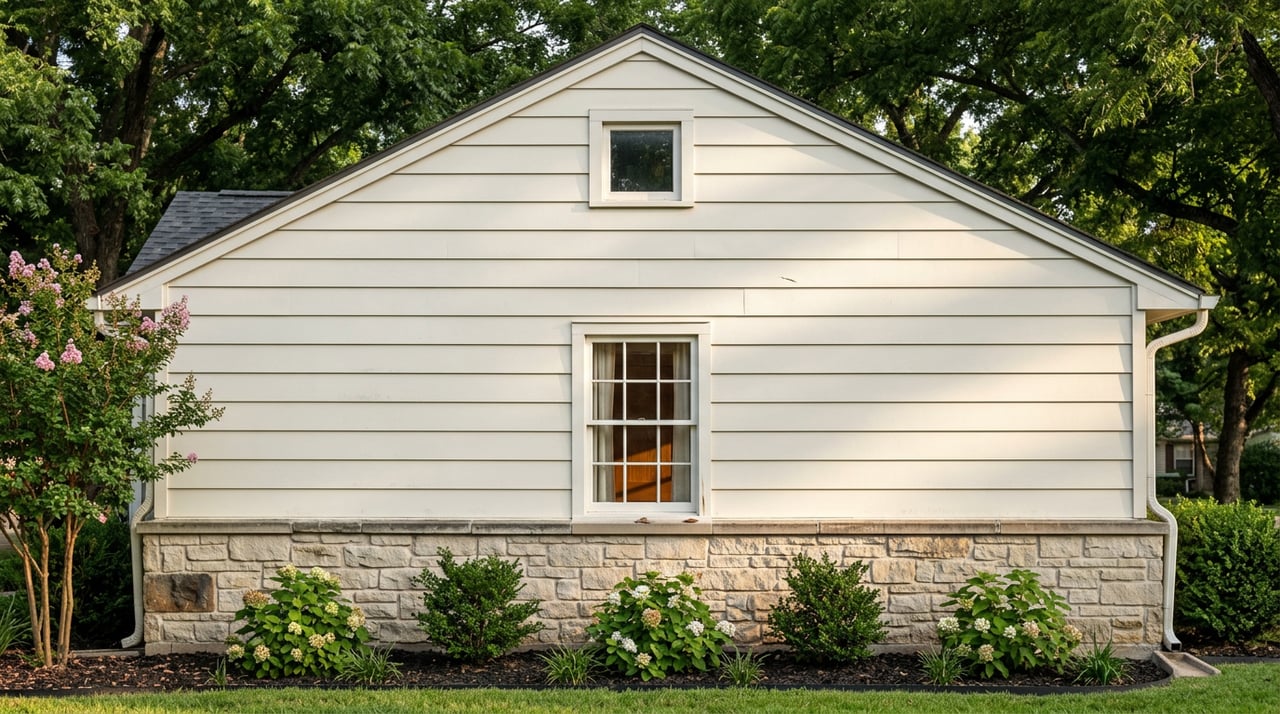
In late 2025, an owner on Okmulgee Street asked to replace failing exterior metal siding with Hardie lap siding and swap out an overhead garage door. Commissioners discussed the condition of the existing siding and the materials proposed, then approved the request unanimously, seven to zero. Two items, both guideline-compliant material swaps, cleared in a single sitting.
A separate filing at 485 College Avenue in August 2025 shows how much more a single request can carry. That application bundled nine changes into one hearing: a new front stoop canopy, wood shutters on the front and rear elevations, removal of a window, a door converted to a window, a relocated window and an added window to restore symmetry, a double window reduced to a single window, an added rear porch, and a bay window replaced with a sliding glass unit. Nine items across multiple elevations is a very different review than a two-item siding and garage door swap, and it puts far more individual decisions in front of the commission at once.
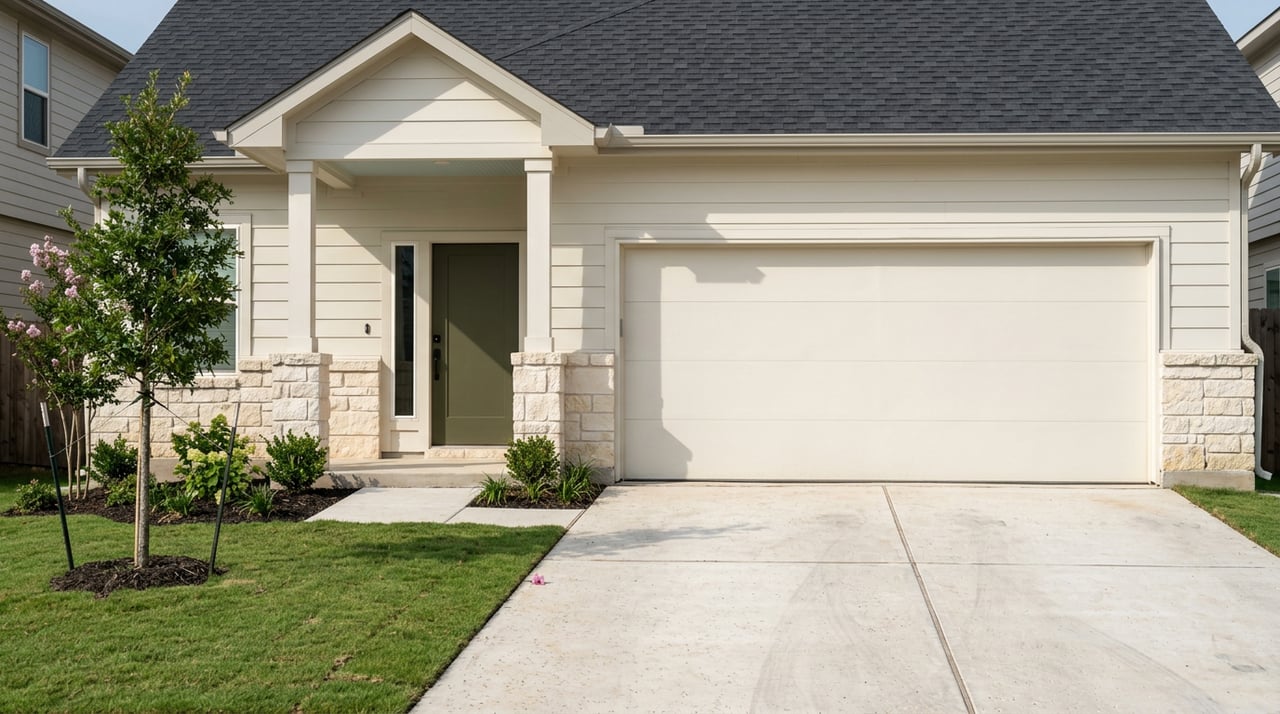
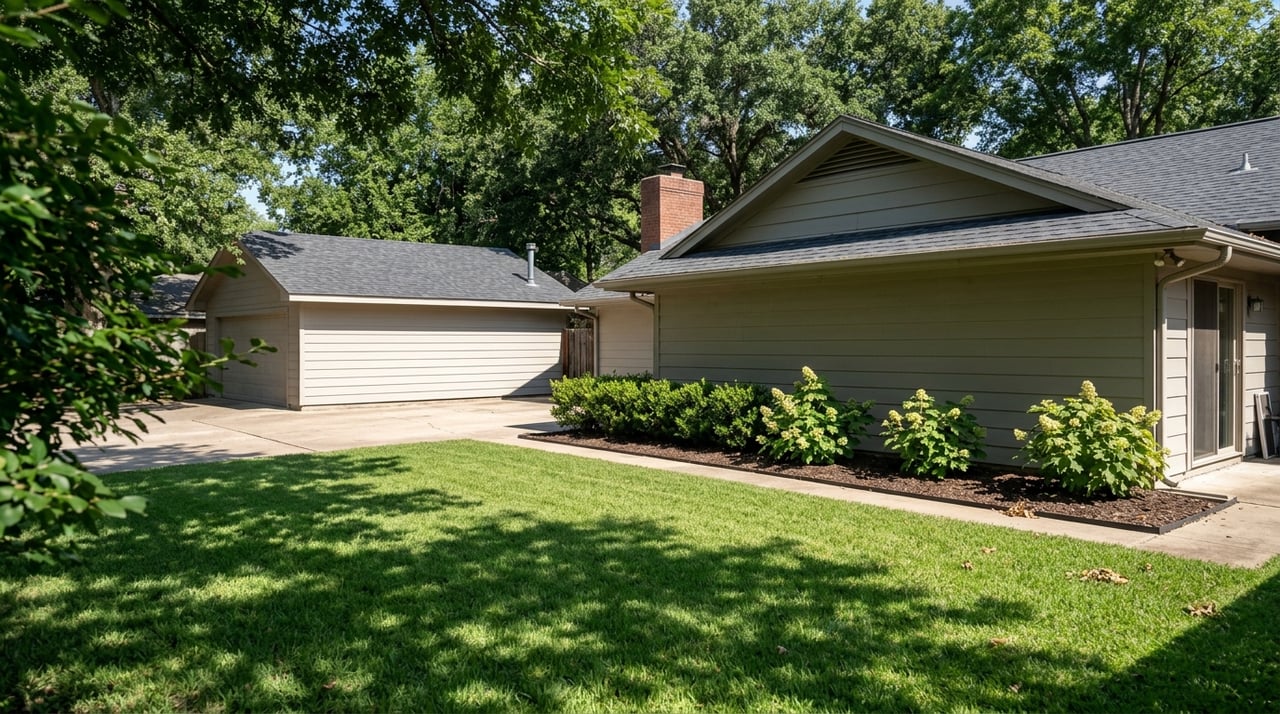
The clearest example of the commission pushing back on function over form came from a Miller Historic District garage proposal that same year. The owner initially wanted a front-facing two-car garage. The commission called that inappropriate for the district's character and directed the applicant to redesign it as a one-car garage, 25 feet by 20 feet, 500 square feet total, placed at the end of the driveway behind the rear elevation and largely hidden from the street, with no trees removed to make room for it. The applicant went back with that smaller version for a second round of review.
The takeaway is not that the commission is obstructionist. It is that scale and street visibility drive outcomes more than most buyers assume. A repair that keeps the house looking the way it already looks moves fast. A change that alters what a passerby sees from the sidewalk, even something as practical as a second garage bay, gets slowed down or scaled back.
Why This Collides With Your Option Period
Oklahoma's standard residential contract defaults to a 10-day inspection period if no other timeframe is negotiated. That window is built around a normal negotiation: buyer finds an issue, buyer and seller trade repair requests, everyone signs off, everyone moves toward closing.
Inside a historic district, that math changes. If your inspection turns up original windows that need replacing, the guidelines say repair has to be shown as infeasible before replacement is even permitted, and the replacement then has to match the original in material, dimension, and profile. If your plans involve anything larger, a fence, an accessory structure, a garage, that project has to wait for the commission's monthly meeting, which happens only once a month except for the September shift. A closing date that lands between meetings can mean waiting weeks for a ruling you assumed would take days.
The Miller garage case is the clearest illustration. The first version of that proposal did not clear the commission as submitted, and the applicant had to come back with a smaller, less visible design for a second round of review. If a buyer's financing or moving timeline had depended on that garage being buildable by a certain date, that first pass alone could have pushed the whole plan back a full commission cycle.
If you are house hunting in Chautauqua, Miller, or Southridge, build that lag into your thinking before you write an offer. Ask what would need a Certificate of Appropriateness, ask how recently the commission has ruled on similar requests, and treat the answer as part of your timeline, not just your budget.
What Sellers Should Get Ahead Of
If you are selling a home in one of these districts and you have already done exterior work, gather whatever Certificate of Appropriateness paperwork exists on file. A buyer's lender, contractor, or agent will eventually ask whether that new siding, that rebuilt porch, or that garage door swap was properly approved, and having the answer ready keeps the transaction moving instead of stalling at a title or underwriting checkpoint.
If you are considering a project before you list, the city's own guidance recommends scheduling a pre-application conversation with planning staff before filing anything for new construction or an addition. That conversation with Norman's Historic Preservation Officer, a role currently held by Anaïs Starr, can save you a rejected filing and a second trip to a meeting that only happens once a month.
A Short FAQ
Is a historic district the same as a homeowners association? No. There are no dues and no private covenant. The Certificate of Appropriateness process is a function of city ordinance, enforced the same way a building permit is, and it applies regardless of who owns the property.
What happens if the commission rejects my project? You have 10 days to appeal the decision to the city's Board of Adjustment.
Can I paint my house any color I want? Yes, if the surface is already painted. Painting previously unpainted brick or stone generally is not permitted without a Certificate of Appropriateness first.
Does a routine repair need approval? No. Ordinary maintenance and repair is exempt. The line gets crossed when a repair becomes a full replacement, especially once you are replacing more than half of a single material on one side of the house, which is the threshold that pulls a project into full review.
Buying or selling in one of Norman's historic districts is not harder than any other transaction in this market, but it runs on a different clock and a different rulebook. Knowing which projects sail through in a single meeting and which ones get sent back for a redesign is the difference between a smooth closing and a stalled one. If you are considering a move into Chautauqua, Miller, or Southridge, or you are ready to list a home in one of them, Sarah Jane Johnson can walk you through what the commission will and will not approve before you are locked into a contract. Let's Connect.